
How Guided Biofilm Therapy Helps Remove White Plaque on Teeth
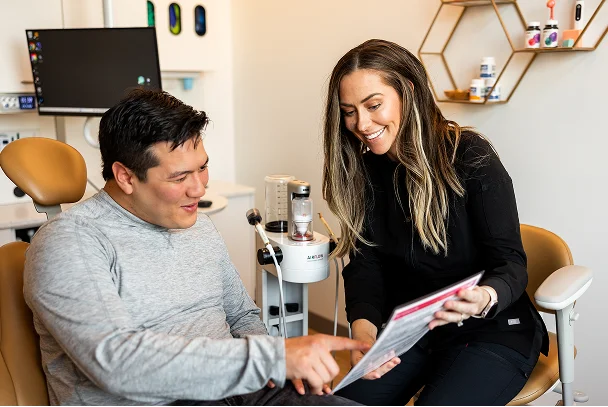
White plaque on teeth is often the first visible sign that bacteria are accumulating faster than daily brushing and flossing can remove them. Although it may seem harmless, this sticky film, if it is not removed regularly, can contribute to cavities and gum disease. Plaque commonly collects along the gumline, between teeth, and around dental restorations where home care may not reach effectively.
Guided Biofilm Therapy (GBT) uses a step-by-step approach to identify and remove bacterial biofilm while making professional cleaning more comfortable. At Restoration Dentistry, this approach supports preventive dental care by focusing on the bacterial cause of many common oral health conditions rather than simply cleaning the teeth.
What Is White Plaque on Teeth and Why Does It Form?
White plaque is a soft bacterial film that forms when bacteria combine with saliva and food particles on the teeth. As bacteria break down sugars from food and drinks, they release acids that can damage enamel and trigger gum irritation.
Plaque begins forming soon after brushing, but several factors can increase how quickly it builds up, including:
- Inconsistent brushing or flossing
- A dry mouth resulting from medications or underlying health conditions.
- Open mouth breathing
- Crowded teeth that trap food debris
- Frequent sugary or starchy snacks (this includes fruits and vegetables!)
- Braces, crowns, bridges, or dental implants that require extra cleaning
Over time, untreated plaque can calcify into tartar, a stubborn buildup that cannot be removed at home and requires a professional cleaning.
Why Should Patients Consider Guided Biofilm Therapy?
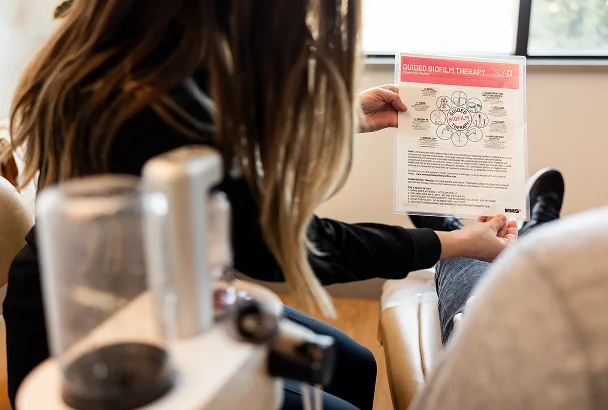
Guided Biofilm Therapy offers a precise and comfortable approach to professional dental cleaning, regardless of how much plaque is present. Plaque will always return between dental visits as soon as we eat a meal. This natural buildup does not necessarily mean that a person has poor oral hygiene.
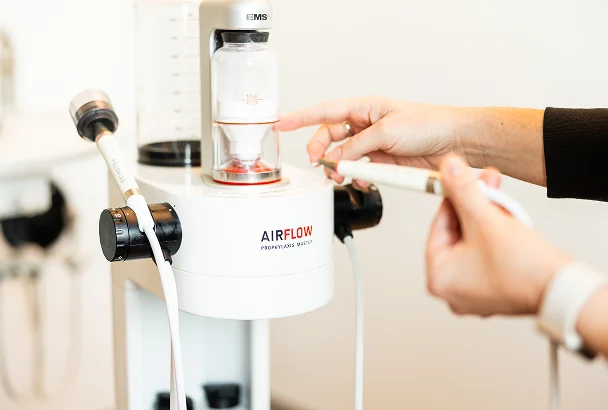
During treatment, a harmless disclosing solution makes bacterial biofilm visible, helping the dental team identify areas that need closer attention. AIRFLOW technology then uses warm water, air, and fine erythritol powder to clean the teeth, gumline, and hard-to-reach surfaces while protecting healthy tooth structure, making it one of the best technology options for thorough cleaning even when significant buildup is present.
Patients seeking a holistic dentist in Meridian may appreciate this minimally invasive, prevention-focused approach. Guided biofilm therapy services in Meridian, ID, can support routine care for patients with light or heavy buildup, including those with braces, implants, crowns, or bridges.
How Guided Biofilm Therapy Targets and Removes Harmful Buildup
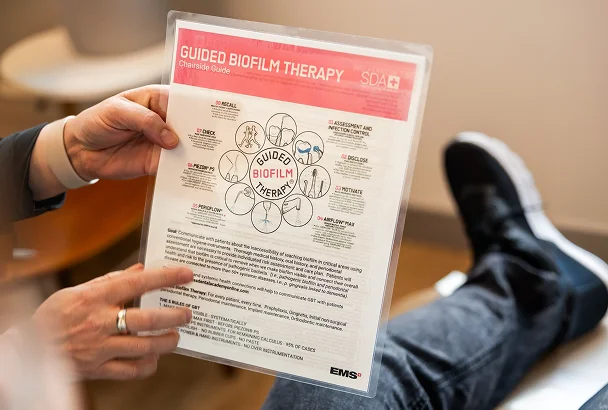
Traditional dental cleanings often begin by removing hardened deposits with hand instruments or ultrasonic scalers. Guided Biofilm Therapy follows a different sequence. It starts by making bacterial plaque visible with a disclosing solution so the areas that need attention can be clearly identified. This step allows the dental team to tailor the cleaning instead of treating every surface the same way.
Once the biofilm has been identified, AIRFLOW® technology delivers a controlled stream of warm water, air, and fine erythritol powder to lift plaque from the teeth, around the gumline, and from other hard-to-reach areas. If tartar is present, it is removed afterward using the least invasive technique appropriate for the tooth. This method supports thorough cleaning while preserving healthy enamel and soft tissue whenever possible.
Benefits of Guided Biofilm Therapy for Healthier Teeth and Gums
Managing bacterial biofilm early helps protect both your teeth and your gums. It also contributes to healthier gums and better long-term oral health.
Promotes Healthier Gum Tissue
Reducing bacterial buildup around the gumline lowers irritation and may decrease bleeding associated with early-stage gum disease.
Lowers the Risk of Tooth Decay
Regularly removing plaque limits the acid produced by harmful bacteria, reducing the risk of enamel damage and cavities.
Provides a More Comfortable Cleaning Experience
Many patients describe Guided Biofilm Therapy as a gentler alternative to conventional cleanings. The combination of warm water and fine powder removes plaque efficiently while reducing the need for extensive manual scaling.
Cleans Around Restorations More Effectively
Crowns, bridges, implants, and orthodontic appliances create areas where plaque can collect more easily. Guided Biofilm Therapy is designed to clean these surfaces thoroughly while protecting the surrounding tissues.
Supports Better Oral Hygiene Habits
Because plaque is disclosed before cleaning, patients can clearly see where it tends to accumulate. This visual feedback often makes it easier to improve brushing and flossing techniques at home.
Final Thoughts
A white plaque is an early warning sign that harmful bacteria are accumulating on the teeth.
If plaque continues to return despite regular brushing and flossing, scheduling a dental evaluation is a practical next step. Your dentist can determine why the buildup is occurring and recommend the most appropriate preventive care based on your oral health needs.
Frequently Asked Questions
About Dr. Craig Clayton

Dr. Craig Clayton is dedicated to helping patients achieve lasting oral health through preventive, minimally invasive dentistry. He combines advanced technology with a whole-body approach to care, focusing on the underlying causes of dental disease rather than simply treating symptoms. His goal is to provide personalized treatment that supports both oral health and overall well-being.


