
How Resin Infiltration Treats a Small Cavity Between Teeth

Not every small cavity between two teeth needs a filling. When the enamel surface is still intact, resin infiltration can treat the lesion from the inside, preserving tooth structure that a conventional preparation would otherwise remove. Whether a lesion qualifies depends on its depth, its surface integrity, and how accessible the contact area is.
Understanding the Causes of Small Cavities Between Teeth
How Enamel Begins to Lose Minerals
Here’s what’s actually happening under that intact-looking surface. Plaque bacteria feed on sugars and other fermentable carbohydrates and produce acid as a byproduct, and that acid pulls calcium and phosphate straight out of your enamel. Between meals, saliva and fluoride are supposed to carry those minerals back in and repair the damage. That’s the system working the way it was designed to.
The problem starts when acid attacks come too frequently for that repair window ever to finish. The outer layer of enamel can still look completely fine while the layer underneath is quietly turning porous. That’s why you can floss every night and still end up with a cavity nobody saw coming.
Factors That Can Increase Cavity Risk
Several conditions can make decay between two teeth more likely:
- Frequent sugar exposure: Repeated snacks or sweetened drinks restart acid production before the mouth has recovered.
- Hard-to-clean spaces: Crowding, overlapping surfaces, orthodontic appliances, and rough filling margins can make plaque removal more difficult.
- Reduced saliva: Dry mouth limits acid neutralization and the supply of minerals available to enamel.
- Previous disease: New cavities can signal that dry mouth, frequent sugar intake, retained plaque, or limited fluoride protection is still contributing to decay.
Medications, dehydration, tobacco use, and certain health conditions can all quietly reduce saliva flow. That’s exactly why prevention has to account for medical history and daily habits rather than focusing only on brushing technique.
Why an X-Ray Is Only Part of the Diagnosis
Early decay between two teeth rarely hurts, which is what makes it easy to miss. A dentist may spot a darker area on a bitewing image, but that image alone can’t tell us whether the enamel surface has actually broken open. I have to read it alongside the clinical exam, your prior records, your cavity history, your diet, your fluoride exposure, and your saliva flow. Resin infiltration is built for a specific kind of lesion, not every dark spot that shows up between two teeth.
How Resin Infiltration Treats Early Cavities
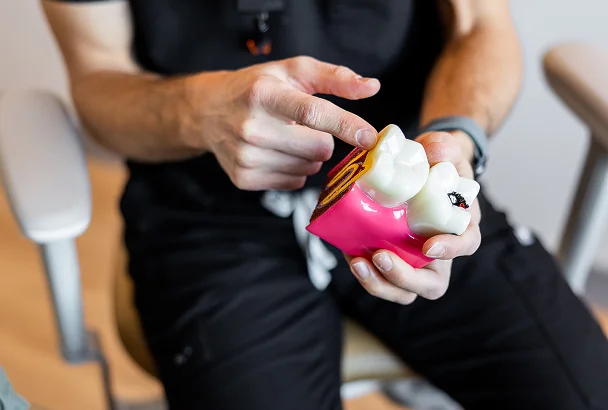
Resin infiltration works by filling microscopic spaces inside enamel that has lost minerals. Without treatment, these channels allow acids and dissolved minerals to move through the lesion. Once hardened, the material blocks pathways within the weakened enamel instead of simply coating its surface.
What Happens During the Procedure
The exact technique depends on the contact area and the material used, but treatment generally includes these steps:
- Confirming candidacy: The dentist reviews the examination and imaging to determine whether the lesion appears non-cavitated and accessible.
- Isolating the area: The tooth is kept dry, and the neighboring tooth and surrounding tissues are protected.
- Preparing the enamel: A conditioning gel opens microscopic pathways within the lesion before the area is rinsed and dried.
- Applying the resin: A low-viscosity material flows into the porous enamel and is hardened with a dental curing light.
- Finishing the contact: The dentist removes excess material and checks the surface, floss contact, and bite when applicable.
Infiltration treats the selected lesion, while daily oral habits, interdental cleaning, dietary changes, and follow-up care address continuing cavity risk.
Candidacy for resin infiltration for small cavities in Meridian, ID depends on lesion depth, surface integrity, and access to the contact area.
Why Resin Infiltration Is a Minimally Invasive Option
Preserving Structure Without Conventional Preparation
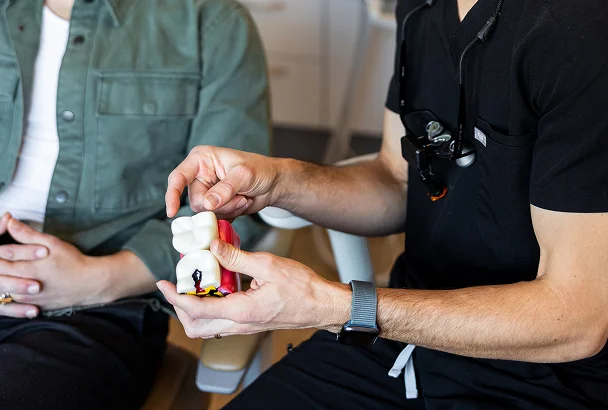
Once a surface has actually cavitated, you have to remove damaged tissue before a filling can go in. Infiltration treats porous enamel without ever creating that conventional preparation. When a lesion qualifies, this approach can:
- Preserve enamel that would otherwise be removed to reach decay between the teeth;
- Avoid drilling into the lesion;
- Reduce or eliminate the need for local anesthesia; and
- Leave more natural structure available if restorative treatment becomes necessary later.
None of that replaces the basics. The treated contact still needs daily cleaning, and whatever’s driving your overall cavity risk still needs attention. Depending on what we find, that might mean more effective products, an in-office fluoride application, fewer acid exposures between meals, or managing dry mouth directly.
What Influences Long-Term Stability
Clinical trials and systematic reviews suggest resin infiltration can slow the progression of selected non-cavitated proximal lesions when it’s paired with real preventive care. The outcome still comes down to lesion depth, access, moisture control during treatment, technique, home care, and how much acid exposure continues afterward. Follow-up exams and bitewing X-rays may make sense too. Still, the schedule should reflect your age, disease history, current findings, and whether new images would tell us something we don’t already know.
Holistic Benefits of Resin Infiltration for Cavities
Looking Beyond a Single Contact Area
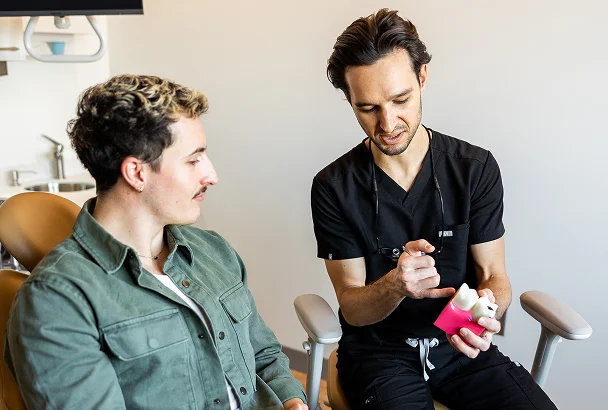
A holistic assessment considers why the lesion developed, rather than evaluating one contact area in isolation. A holistic dentist in Meridian may review several connected factors:
- Saliva quantity and dry-mouth symptoms;
- Eating frequency and sources of fermentable carbohydrates;
- Fluoride exposure and interdental cleaning habits;
- Recent cavities and the condition of existing restorations; and
- Medications or health conditions that may affect oral care.
That review tells us what’s driving your risk, and it shapes the prevention plan after treatment. Infiltration is one piece of the puzzle. It preserves intact structure and can arrest an early lesion, but it doesn’t treat a systemic issue or replace fluoride, plaque removal, dietary changes, or regular monitoring.
Discussing Materials and Medical History
Tell us about any material allergies, past reactions to dental products, pregnancy, medical conditions, or medications you’re currently on during your health review. That helps us confirm the resin and timing are right for you. And if you have specific preferences about materials, ask which product we’re planning to use and why. You deserve to be sitting in the driver’s seat on that decision, not just told what’s happening to you.
Conclusion
Resin infiltration can be a real option when the enamel surface is still intact, and we can reach the area and keep it dry. The exam, the imaging, and your overall cavity risk are what determine whether infiltration or a conventional filling is the better fit. Cavities are a curable disease, and catching one at this stage is exactly the kind of moment where that’s true. Contact Restoration Dentistry to schedule an evaluation and talk through what the findings actually show.
Dentist Bio

Dr. Craig Clayton, DMD, earned his dental degree from the University of Kentucky College of Dentistry. His official profile lists additional education through the BAARD Institute for Biomimetic Restorative Dentistry, The Nejad Institute, and the Kois Center. His clinical approach emphasizes preserving natural tooth structure, identifying factors that contribute to recurrent oral disease, and clearly explaining treatment choices. Read Dr. Clayton’s official profile.