
Holistic Approaches to Treat White Spots on Front Teeth

During a consultation, dentists examine areas of enamel discoloration as signs of a shift in the tooth’s mineral balance, often showing up as white spots on the front teeth. A patient-focused evaluation considers not only the appearance of enamel but also the health of the underlying dentin and pulp, where the nerve and blood supply are housed. Repeated acid exposure from oral bacteria lowers surface pH. When this acidic environment persists, calcium and phosphate ions diffuse out of the enamel structure. That microscopic change alters light reflection and produces a chalky white appearance.
The first clinical step is determining whether the area is active. An active lesion continues to lose minerals and may progress toward the dentin, while a stable area has rehardened but still appears as a visible white opacity. Treatment depends on whether the process is ongoing or has been arrested.
Understanding the Causes of White Spots on Front Teeth
The most common cause of white spots on teeth is bacterial biofilm (plaque). When bacteria stick to the tooth surface, they feed on fermentable carbohydrates, like sugars and processed carbs, and produce acids as a byproduct. These acids disrupt the natural balance between enamel demineralization and remineralization, gradually pulling minerals out of the enamel. Normally, saliva helps protect teeth by buffering acid and delivering minerals like calcium and phosphate that support enamel repair. But when saliva flow is reduced, this protective system becomes less effective, leaving enamel more vulnerable to mineral loss.
Orthodontic appliances can also increase the risk of white spot lesions. Brackets and wires create small areas where plaque can easily accumulate, especially near the gumline. If plaque is not regularly removed, localized mineral loss can develop around the edges of the brackets. After braces are removed, these areas may appear as faint outlines or white spots due to changes beneath the enamel surface.
Fluorosis, however, develops through a different process. It occurs during tooth development, when excessive fluoride exposure alters how enamel crystals form. The enamel surface remains intact and healthy, but the internal structure of the enamel reflects light differently, creating the appearance of white streaks or spots.
During a clinical evaluation, dentists look closely at several factors to understand what’s going on. This may include:
- Careful visual inspection under controlled lighting
- Surface assessment to determine hardness
- Evaluating the surrounding gum tissue and bone support
- Reviewing dental X-rays if the depth of the lesion is unclear
If enamel demineralization progresses deep enough to reach the dentin, bacteria and their toxins can travel through tiny channels in the tooth called dentinal tubules and move toward the pulp (the nerve of the tooth). At that stage, inflammation inside the tooth becomes possible.
Identifying these areas early greatly reduces the risk of deeper damage and allows for more conservative treatment options.
Resin Infiltration for White Spot Lesions: A Minimally Invasive Solution
When the enamel surface is still intact and no cavity has formed, conservative treatment options may be possible. In some cases, resin infiltration for white spot lesions in Meridian, ID, can help strengthen weakened enamel and improve the appearance of these areas.
The procedure begins by isolating the tooth to keep the area dry. A conditioning solution is applied to gently remove the outer mineral layer, which allows access to the porous enamel beneath the surface. The tooth is then dried so a low-viscosity resin can flow into the microscopic spaces created by demineralization.
Once the resin penetrates these tiny pores, it is hardened with a curing light. This stabilizes the weakened enamel structure. The tooth is then polished to create a smooth surface that helps reduce future plaque buildup.
It’s important to understand that this treatment does not regenerate new enamel crystals. Instead, the resin fills the internal porosities within the enamel and changes how light reflects from the surface. This helps the white spot blend more naturally with the surrounding tooth structure while also reinforcing the weakened area.
Not every white spot lesion is a good candidate for resin infiltration. During an evaluation, dentists look for several signs that the enamel can still be treated conservatively. These typically include:
- No visible cavitation or surface breakdown
- No signs on dental X-rays that the lesion has reached the dentin
- Healthy gum tissue and stable bone support around the tooth
- A patient who is able to maintain consistent oral hygiene
If the damage has already progressed into the dentin, infiltration alone will not provide adequate protection. In those cases, removal of infected tissue, followed by a bonded restoration, may be required to protect the pulp.
Post-treatment monitoring is necessary to confirm stability. Any area previously weakened remains susceptible if biofilm control declines.
When to Consult a Holistic Dentist for White Spots
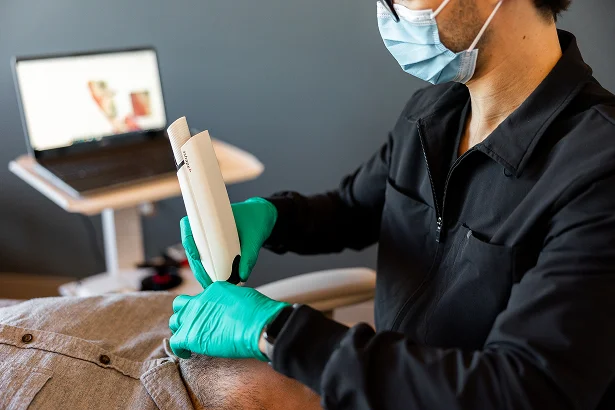
Persistent white spots on teeth, especially when accompanied by sensitivity or gum inflammation, should be evaluated by a dental professional. A holistic dentist in Meridian, ID, will assess not only the enamel itself but also the surrounding structures that support long-term oral health, including the gums, bite alignment, and supporting bone.
A consultation is especially recommended if:
- Sensitivity suggests dentin exposure
- Gum bleeding indicates an inflammatory response
- Discoloration appears to increase in size
- Orthodontic treatment has recently been completed
During the evaluation, the dentist may perform periodontal charting to measure gum attachment levels and review dental radiographs to examine the supporting bone around the teeth. If gum infection or attachment loss is present, stabilizing the periodontal tissues becomes the priority before cosmetic improvements are considered.
In early stages, some white spot lesions may respond to remineralization strategies. Prescription-strength topical agents can help deliver minerals back into porous enamel and support natural repair processes.
After a defined period of treatment, the area is reassessed to determine whether mineral balance has improved and the enamel has stabilized.
However, it’s important to understand that cosmetic improvement has biological limits. The depth of enamel porosity and the thickness of the enamel layer both influence the final appearance. While treatments can often reduce contrast, no procedure can guarantee perfectly uniform enamel.

Strategies to Prevent White Spots on Front Teeth in the Future
Long-term management centers on maintaining mineral equilibrium and controlling bacterial load. Unlike bone or soft tissue, enamel cannot regenerate once structurally lost.
Preventive measures include:
- Twice-daily brushing to disrupt plaque biofilm
- Daily flossing to reduce gum inflammation and protect attachment levels
- Fluoride or hydroxyapatite application when clinically indicated
- Limiting frequency of acidic beverages to allow salivary buffering
- Routine examinations to detect early structural change
Patients who have recently completed orthodontic treatment often benefit from closer monitoring. Areas that were previously covered by brackets may remain vulnerable until the enamel’s mineral balance fully stabilizes.
Saliva also plays a critical protective role. When salivary flow is reduced, due to medications, dehydration, or certain health conditions, additional preventive strategies may be needed to reduce the risk of enamel breakdown.

Final Thoughts
White spots on teeth usually reflect changes beneath the enamel surface, rather than simple surface staining. Proper diagnosis requires evaluating enamel hardness, lesion depth, gum health, and the proximity of the pulp inside the tooth.
Depending on these findings, treatment may range from monitoring and remineralization to resin infiltration or restorative care.
At Restoration Dentistry, treatment decisions focus on preserving healthy tooth structure, controlling infection, and supporting long-term oral stability through careful examination and ongoing monitoring.


